


Product Attribute Table
|
Trade Name |
Direct Brown 210 |
|
Type |
Direct Dyes |
|
CAS No. |
73507-19-4/12222-29-6 |
|
H.S.CODE |
32041470 |
|
Appearance |
Brown powder |
|
Shade |
Brown |
|
Fastness to Washing |
4-5 |
|
Fastness to Light |
7 |
|
Fastness to Perspiration |
3-4 |
|
Fastness to Wet Rubbing |
4-5 |
|
Fastness to Dry Rubbing |
4-5 |
|
Applicable Fibers |
Cotton, viscose and other cellulose fibers; polyester/cotton blends; polyester/viscose blends; paper pulp and coated paper |
|
Application Process |
Exhaust dyeing, jig dyeing, continuous pad dyeing; direct printing and discharge printing on cellulose fabrics; one-bath dyeing for polyester/cellulose blends; paper pulp dyeing and surface coating |
Product Details
Direct Brown 210 is a water-soluble direct dye developed for efficient coloration of cellulose-based materials and related substrates. It is supplied as a fine brown powder and is characterized by stable aqueous solubility, allowing it to be applied directly from water without chemical fixation reactions or carrier systems.
The dye exhibits strong substantivity toward cellulose fibers, enabling uniform adsorption onto cotton, viscose, and similar materials through hydrogen bonding and intermolecular interactions. This affinity produces full-bodied brown shades with good depth and tonal clarity, while maintaining reliable shade consistency across repeated dyeing cycles. Because fixation occurs through direct fiber attraction rather than covalent bonding, the dyeing process remains simple and highly controllable.
Direct Brown 210 is compatible with a wide range of dyeing methods, including exhaust dyeing, jig dyeing, and continuous padding. In textile printing, it performs well in direct printing and is also suitable for discharge printing systems, where clean background removal and sharp pattern definition are required. These properties make it particularly useful for patterned cotton fabrics and decorative textiles.
A notable advantage of Direct Brown 210 is its performance in blended fiber systems. The dye can be applied in a single bath to polyester/cotton and polyester/viscose blends, achieving balanced coloration of both fiber components without the need for sequential dyeing steps. This one-bath approach simplifies processing, shortens production time, and reduces consumption of water, energy, and auxiliary chemicals compared with conventional two-stage methods.
Outside the textile sector, Direct Brown 210 is also used in paper coloration. It provides good fiber penetration and leveling in pulp dyeing, as well as uniform shade development in surface sizing and coating applications. Its chemical stability supports consistent color performance during papermaking and subsequent processing.
Our Direct Brown 210 is manufactured with controlled impurity levels and consistent particle characteristics to ensure stable dissolution and predictable application behavior. Technical guidance is available to support optimized use in textile dyeing, printing, and paper coloring, helping customers achieve efficient production with dependable color quality.
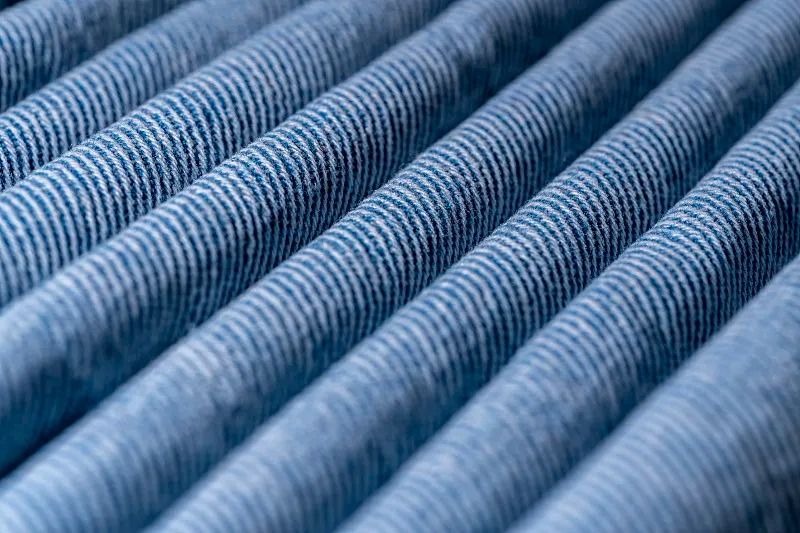


Direct Dyes
Advantages
Direct dyes are water-soluble anionic dyes that can be applied directly to cellulose fibers such as cotton, linen, and viscose without the use of mordants. They are among the most economical and easy-to-use dye classes for cellulosic textiles. Their main advantages are simple operation, wide process tolerance, and low overall cost. However, their wet fastness is generally moderate to low, so they are best suited for products where extremely high durability is not required or where they are used as ground shades.
Applicable Industries
Because of their high cost efficiency and uncomplicated processing, direct dyes are widely used in the manufacture of cellulose-based textile products with strong price sensitivity. Typical applications include cotton and viscose fabrics for domestic markets, fast-fashion apparel, and mass-produced textiles where washing fastness requirements are moderate. They are commonly selected by manufacturers prioritizing low production cost and high throughput.
Recommended Process
Direct dyeing processes are designed to be simple and economical. Dyeing is usually carried out in a neutral to weakly alkaline bath with controlled heating to promote dye uptake. For yarn dyeing and small fabric lots, conventional exhaust dyeing is the preferred method. For large-scale woven fabric production, continuous pad dyeing offers higher efficiency and productivity. After dyeing, a fixing agent treatment is strongly recommended, as it is essential for improving wet fastness and ensuring acceptable product quality.
Factory

Certificates

Exhibitions

Shipping

Hot Tags: direct brown 210, China direct brown 210 manufacturers, suppliers, factory, brown direct dye, direct blue dye, direct yellow 4, dye and dye, Direct Blue 201, bulk dye


