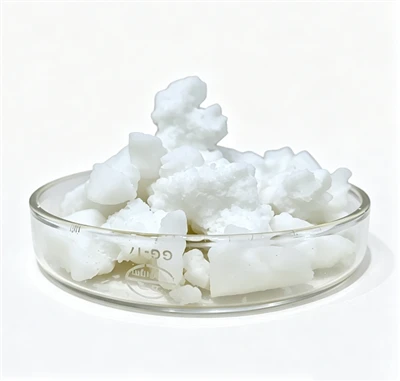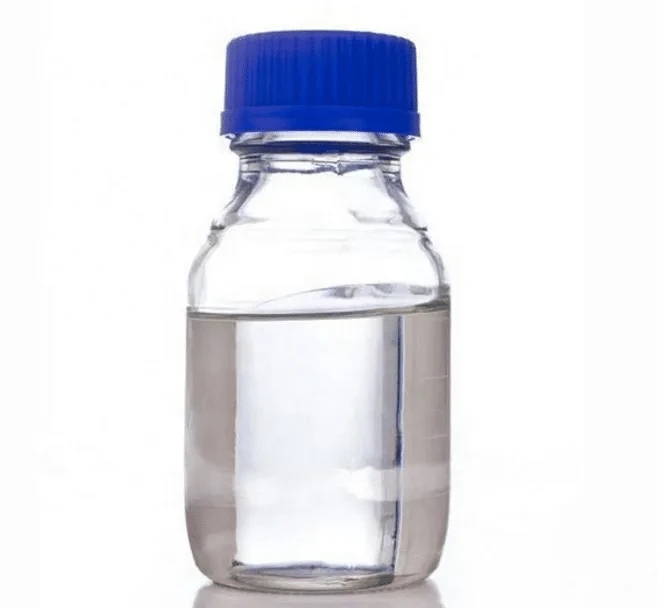
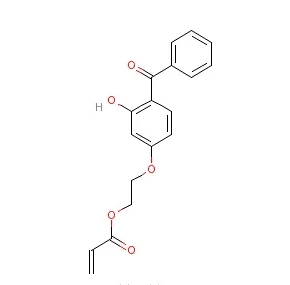
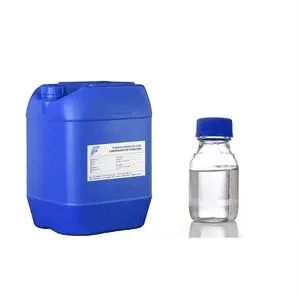
Product Introduce
2-Hydroxyethyl Methacrylate Phosphate (HEMAP) is a phosphate-functional methacrylate monomer used as an adhesion promoter and functional additive in polymer formulations. It combines a polymerizable methacrylate group with an acidic phosphate group, making it useful in systems designed to improve adhesion to metal and other inorganic substrates.
HEMAP is particularly relevant to UV-curable coatings, printing inks, adhesives, and other free-radical polymerization systems. Its phosphate functionality can interact with suitable substrate surfaces, while its methacrylate functionality can participate in polymerization, helping improve interfacial adhesion in appropriately formulated systems.
Depending on the formulation and substrate, HEMAP may also contribute to coating durability and corrosion protection. Actual performance depends on resin chemistry, substrate preparation, dosage, curing conditions, and environmental exposure.
|
Product Name |
2-Hydroxyethyl methacrylate phosphate,HEMAP,PM-2 |
|
Type |
Adhesion promoter |
|
CAS No. |
52628-03-2 |
|
Molecular Formula |
C6H13O7P |
|
Molecular Weight |
228.14g/mol |
|
Appearance |
Clean and clear liquid |
We offer HEMAP for industrial formulation and sourcing requirements. Product specifications, packaging, and technical documentation can be confirmed according to the required grade and intended application.
|
Test Item |
Test Result |
|
Color(Hazen) |
8 |
|
Acid Value(mgKOH/g) |
292 |
|
Phosphoric Acid(wt%) |
1.72 |
|
Viscosity(mPaS) |
972 |
|
Density(g/ml) |
1.2724 |
|
Refractive Index |
1.4618 |
|
Moisture(wt%) |
ND |
|
Inhibitor(MEHQ ppm) |
430 |
Applications of HEMAP
(1)UV-Curable Coatings:HEMAP is used as an adhesion promoter in selected UV-curable coating formulations, especially where adhesion to metal or other inorganic substrates is important.
(2)Printing Inks:In UV-curable printing inks, HEMAP may help improve ink adhesion to challenging substrates, including selected metal and inorganic surfaces. Its suitability depends on the ink vehicle, pigment package, curing conditions, and substrate characteristics.
(3)Adhesives and Sealants:HEMAP can be incorporated into selected adhesive formulations to improve bonding to metal and other suitable substrates. It is relevant to systems based on compatible polymerization chemistry, where interfacial adhesion is a limiting factor.
(4)Protective and Metal Coatings:In metal-coating formulations, HEMAP may contribute to stronger coating–substrate interaction. Research has examined phosphate-functional HEMAP in modified resin systems for iron protection, including its potential role in improving adhesion and corrosion resistance.
(5)Functional Polymers and Resin Synthesis:HEMAP can serve as a functional monomer in selected polymerization and resin-modification processes. Its phosphate group introduces additional functionality into the polymer structure, which may be useful when developing systems requiring specific interfacial or surface properties.
FAQ
Q: How does HEMAP improve adhesion compared with a conventional methacrylate monomer?
A: HEMAP introduces phosphate functionality in addition to its polymerizable methacrylate group. The phosphate group can interact with suitable metal oxide and other polar inorganic surfaces, while the methacrylate group can participate in polymerization within a compatible resin system. A conventional methacrylate monomer without phosphate functionality may not provide the same interfacial interactions. The actual difference in adhesion must be established through comparative testing in the target formulation.
Q: What is the difference between HEMAP and silane coupling agents?
A: HEMAP is a phosphate-functional methacrylate monomer, whereas silane coupling agents contain silicon-based functionality designed to interact with suitable surfaces and coupling partners. Both may be used to improve adhesion, but their mechanisms, substrate compatibility, hydrolysis requirements, and formulation behavior differ. HEMAP may be worth evaluating in compatible free-radical polymerization systems, while a silane may be more suitable for a formulation requiring silane-specific surface coupling. Selection should be based on the substrate and the complete formulation rather than on the generic label "adhesion promoter."
Q: What dosage of HEMAP should be used in a UV coating or ink?
A: The appropriate dosage depends on the resin chemistry, substrate, curing method, and required adhesion performance. Some supplier technical data sheets indicate an initial evaluation range of approximately 0.5–5% by weight of the total formulation, but this is not a universal specification. A practical screening study should compare several concentrations and assess adhesion, viscosity, cure behavior, film appearance, and durability. Excessive addition should not be assumed to improve performance continuously.
Q:Is HEMAP suitable for water-based coatings?
A: Suitability depends on the specific grade and aqueous formulation. HEMAP is an acidic phosphate-functional monomer, and its stability, hydrolysis behavior, and compatibility with waterborne resins must be considered. A grade developed for conventional UV-curable systems should not automatically be added directly to a water-based coating or emulsion. Confirm the supplier's compatibility guidance and conduct storage-stability and application tests first.
Laboratory

Exhibitions

Hot Tags: 2-hydroxyethyl methacrylate phosphate, China 2-hydroxyethyl methacrylate phosphate manufacturers, suppliers, factory, fire retardant substances, heat retardant, polypropylene fire resistant, pp flame retardant, reducing and bleaching agents, tris fire retardant