


Product Attribute Table
|
Product Name |
Fluorescent Brightener OB |
|
Type |
Fluorescent Whitening Agent |
|
Molecular Weight |
430 |
|
CAS No. |
7128-64-5 |
|
EINECS.NO. |
230-426-4 |
|
Melting Point |
196-203℃ |
|
Appearance |
pale green to yellow powder |
|
Boiling Point |
>500℃ |
|
Density |
1.26 |
|
Form |
solid |
|
Color |
light green to yellow |
Product Details
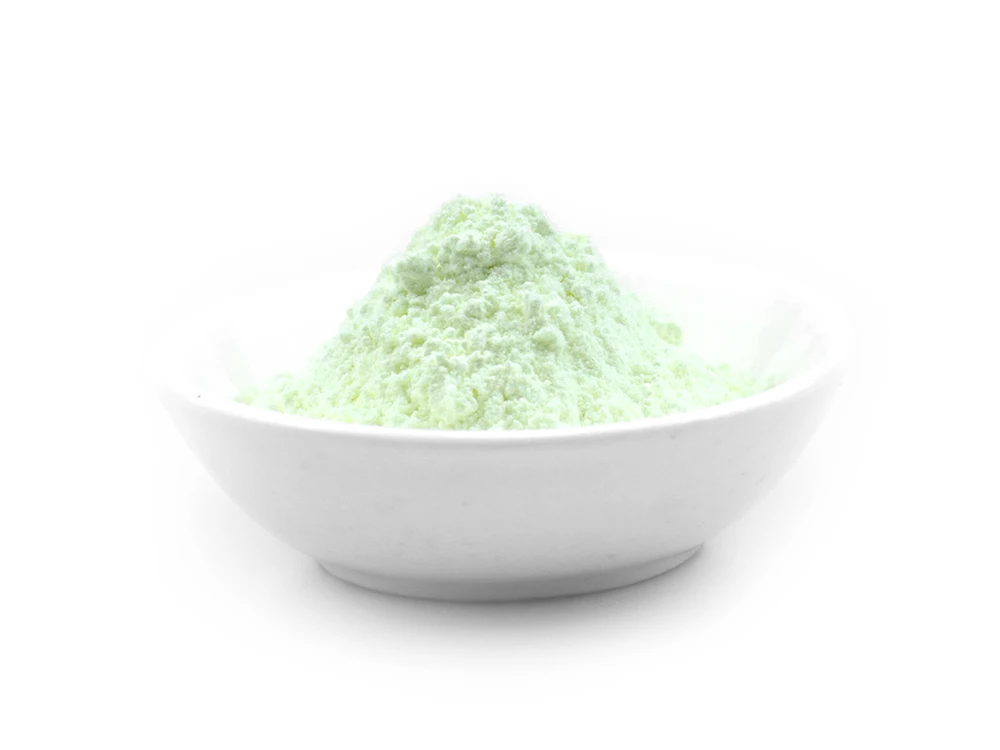
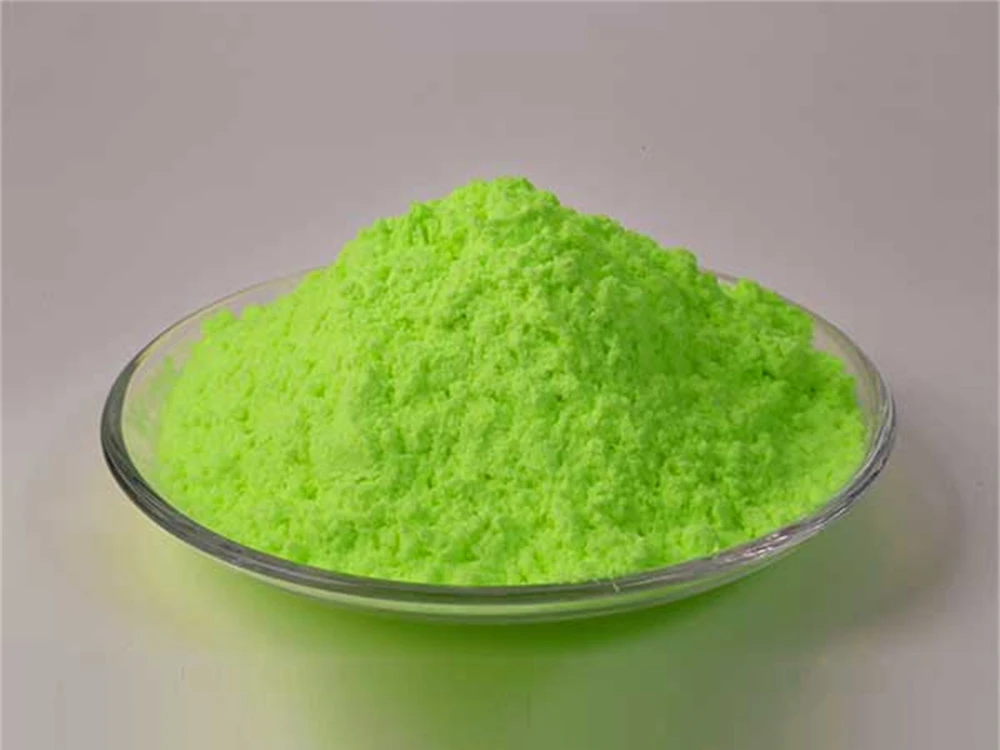
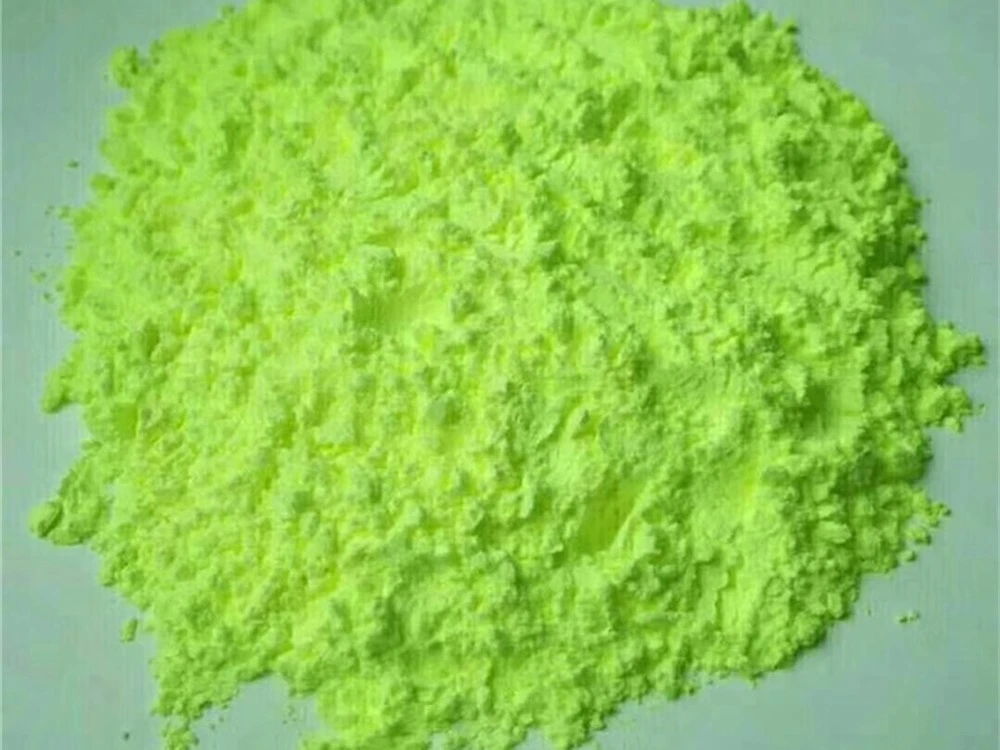
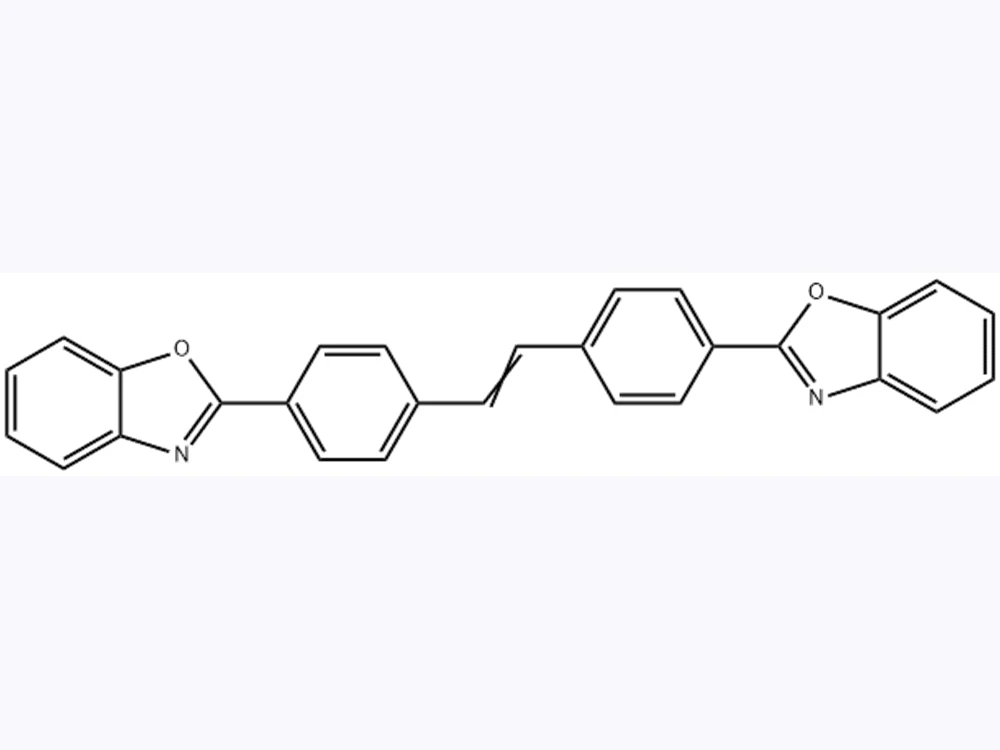
Fluorescent Brightener OB (commonly referred to as Optical Brightener OB or OB-1) is a high-performance stilbene-based fluorescent whitening agent. Its physical form is a fine yellowish-green crystalline powder, with a characteristic melting point around 200 °C and thermal-decomposition temperature exceeding 220 °C. This thermal stability makes it particularly suitable for high-temperature processing in polymer and fiber industries. The compound shows very low solubility in water, but dissolves readily in non-polar and weakly polar media such as alkanes, fatty substances, mineral oils, waxes, and most common organic solvents (e.g., toluene, xylene, DMF, chloroform).
The primary function of Fluorescent Brightener OB is to optically enhance the whiteness and brightness of substrates through a photophysical process called fluorescence. It absorbs ultraviolet radiation in the range of 300–400 nm and re-emits the energy as intense blue-violet visible light (typically 420–480 nm). This emitted blue light compensates for the inherent yellowish tint of many untreated materials, making them appear optically whiter, brighter, and more vivid to the human eye.
In industrial applications, OB-1 is widely employed as a whiteness booster in a variety of polymer systems. It is effectively used in plastics such as PVC, polystyrene (PS), ABS, polyethylene (PE), and polypropylene (PP), where it is added during extrusion, injection molding, or film blowing. In the textile sector, it serves as a key whitening agent for polyester fibers and fabrics, either applied during melt-spinning or through exhaust/ pad-thermosol processes. Beyond plastics and fibers, it is also utilized in coatings, paints, printing inks, and acrylic resins, where it improves the visual brightness and cleanliness of finished products.
A notable feature of OB-1 is its compatibility with colorants. When combined with dyes or pigments in colored formulations, it can impart a special luminous effect-often described as a "glow" or "cool brightness"-that enhances color depth and vibrancy without altering the base hue. This makes it valuable for creating premium visual effects in specialty packaging, automotive interiors, sports gear, and high-visibility safety textiles.
Quality-grade OB-1 exhibits excellent light-fastness and chemical stability under normal processing conditions. It does not yellow upon prolonged exposure to heat or UV radiation, and it shows minimal migration or blooming in most polymer matrices. Our product is manufactured under strict quality controls to ensure consistent particle size, high purity, and batch-to-batch reproducibility. We provide technical support for dosage optimization, incorporation methods, and formulation guidance tailored to your specific substrate and process requirements.
Recommended Dosage
In the production and processing of plastic products, to achieve the desired whiteness and translucency of the finished product, this additive should be added as needed. The following are recommended addition ratios and corresponding dosages for various commonly used plastic substrates:
1. Polyvinyl Chloride (PVC): For whitening, the addition ratio is 0.01%-0.05%, i.e., 10-50 grams per 100 kg of raw material; for achieving a transparent effect, the addition ratio is 0.0001%-0.001%, i.e., 0.1-1 gram per 100 kg of raw material.
2. Polystyrene (PS): For whitening, the addition ratio is 0.001%, i.e., 1 gram per 100 kg of raw material; for achieving a transparent effect, the addition ratio is 0.0001%-0.001%, i.e., 0.1-1 gram per 100 kg of raw material.
3. Acrylonitrile-butadiene-styrene copolymer (ABS): When used for whitening, the addition ratio is 0.01%-0.05%, i.e., 10-50 grams per 100 kg of raw material.
4. Polyolefins (including PE and PP): When used for whitening, the addition ratio is 0.005%-0.05%, i.e., 5-50 grams per 100 kg of raw material; when pursuing transparency, the addition ratio is 0.0005%-0.001%, i.e., 0.5-1 gram per 100 kg of raw material.
Factory

Certificates

Exhibitions

Shipping

Hot Tags: Fluorescent Brightener OB, China Fluorescent Brightener OB manufacturers, suppliers, factory, fluorescent whitening agent, C I Fluorescent Brightener PS 2000, coloring dye, color and dye, C I Fluorescent Brightener MST, C I Fluorescent Brightener 135


