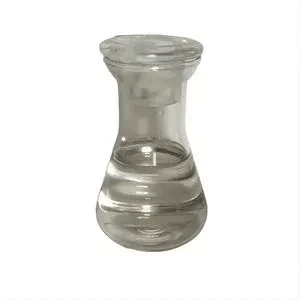
Product Introduce
|
Product Name |
Cresyl Diphenyl Phosphate,Diphenylp Tolyl Phosphate |
|
CAS No. |
26444-49-5 |
|
Molecular Formula |
340.3096 |
|
Molecular Weight |
C19H17O4P |
|
Appearance |
Colorless transparent liquid |
|
Melting Point |
-38℃ |
|
Boiling Point |
235-255℃ |
|
Flash Point |
232℃ |
|
Water Content |
0.1% Max |
|
Acid Value |
0.1 mgKOH/g Max |
|
Density |
1.195~1.212 |
Cresyl Diphenyl Phosphate (CDP) is a halogen-free phosphate ester flame retardant used in a wide range of polymer, resin, rubber, and coating formulations. With good compatibility, low volatility, hydrolytic stability, and electrical insulation properties, CDP is suitable for applications where both flame-retardant performance and formulation flexibility are required.And CDP is a high-quality, low-volatility, and more flexible alternative to triphenyl phosphate (TPP).
CDP is commonly used in PVC, polyurethane (PU), rubber, PC/ABS, engineering plastics, epoxy resins, phenolic resins, and other polymer systems. It can also function as a flame-retardant plasticizer in selected formulations, helping improve flexibility and processing characteristics while providing flame-retardant performance.
For industrial customers sourcing Cresyl Diphenyl Phosphate (CAS 26444-49-5), we provide product specifications, quality documentation, samples, and bulk supply support according to application and purchasing requirements.
Applications of Cresyl Diphenyl Phosphate
Cresyl diphenyl phosphate is widely used as an industrial flame retardant. It can be added to plastics, synthetic fibers, coatings, and adhesives to enhance their flame-retardant properties. It also serves as a raw material for light stabilizers, antistatic agents, and plasticizers.
Safety Information
Diphenyl tolyl phosphate has low volatility at room temperature but may decompose to release toxic substances at high temperatures. It is irritating to the skin, eyes, and respiratory tract; please use personal protective measures-such as wearing gloves and safety goggles-when handling the substance. Store in a cool, dry, and well-ventilated area, away from sources of ignition and oxidizing agents. Avoid contact with strong oxidizers, strong acids, and strong bases during use. Seek immediate medical attention in the event of accidental inhalation, ingestion, or skin contact.
FAQ
Q: Can CDP be used in PC/ABS?
A: Yes. CDP can be used in PC/ABS and other engineering plastic formulations. Its compatibility and flame-retardant properties make it a potential option for engineering plastics requiring improved flame resistance.
Q: Can CDP be used in lithium-ion battery electrolytes?
A: CDP has been studied as a flame-retardant additive for lithium-ion battery electrolytes. Research found that CDP could reduce electrolyte flammability and improve thermal safety, although changes in electrochemical performance were also observed. Therefore, battery applications require application-specific testing and validation.
Q: What is the difference between CDP and TPP?
A: CDP (Cresyl Diphenyl Phosphate) and TPP (Triphenyl Phosphate) are both non-halogenated phosphate ester flame retardants, but they have different chemical structures and physical properties. CDP contains a cresyl group in place of one phenyl group and has a molecular weight of approximately 340.31 g/mol, compared with approximately 326.28 g/mol for TPP.
Their compatibility, plasticizing effects, thermal behavior, and performance can differ depending on the polymer system. Formulation testing is recommended when selecting between CDP and TPP.
Q: What is CDP flame retardant used for?
A: CDP is mainly used in PVC, polyurethane, rubber, PC/ABS, engineering plastics, epoxy resins, phenolic resins, and other polymer systems. It is also used in selected coatings, adhesives, and specialty applications.

Exhibitions

Hot Tags: cresyl diphenyl phosphate, China cresyl diphenyl phosphate manufacturers, suppliers, factory, chemical dyes in textiles, fire retardant materials, flame retardant material, flame retardant plastic, flammable retardant, tris flame retardant