Due to their hydrophobic small molecular structure and unique physical form, disperse dyes exhibit unique property requirements in the logistics process. These logistics properties not only relate to the safety of transportation and storage but also directly affect the dispersion stability and dyeing effect during final use, thus receiving high attention in supply chain management.
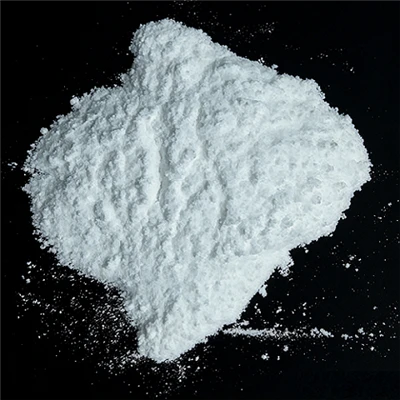
From a physical perspective, disperse dyes are mostly supplied in powder or granular form, and some are pre-formed into liquid dispersion pastes. Powder products have fine particle sizes and large surface areas, easily generating dust. Dust-proof and airtight measures must be taken during handling and loading/unloading to prevent inhalation hazards and environmental pollution. Granular products, due to granulation processing, have good flowability and less dust generation, making them more suitable for mechanized conveying and automatic weighing systems, reducing occupational health risks and improving operational efficiency. Liquid disperse dyes use water as a medium, requiring attention to viscosity, anti-sedimentation, and anti-microbial growth properties. Violent shaking and freezing at low temperatures should be avoided during transportation to prevent demulsification or stratification.
In terms of stability, disperse dyes are relatively sensitive to temperature, humidity, and light. High temperatures accelerate the aggregation and decomposition of dye particles, reducing dispersion uniformity; high humidity environments easily lead to powder hygroscopic agglomeration, affecting solubility and dispersion performance; strong light exposure may cause partial degradation of azo structures, resulting in color changes. Therefore, storage and transportation typically require cool, dry, and light-protected conditions, with controlled ranges for ambient temperature and relative humidity. Packaging materials should possess good sealing and moisture-proof properties, commonly using multi-layer composite bags or containers lined with moisture-proof films to minimize the impact of external factors on dye quality.
Dispersibility itself is a crucial indicator of logistics quality control. Vibration, temperature differences, and aging changes during transportation and storage can disrupt the kinetic stability of the original dispersion system, leading to particle re-aggregation. Therefore, liquid products often contain appropriate amounts of dispersants and stabilizers, and undergo particle size testing and suspension stability tests before leaving the factory to ensure they remain usable upon arrival at the user's end.
Furthermore, logistics must comply with regulations related to hazardous materials and the environment. While most disperse dyes are not classified as high-risk chemicals, some dispersions containing organic solvents or special functional products may involve flammability or environmental sensitivity requirements, necessitating compliance with relevant regulations for transportation and storage.
Overall, the logistical characteristics of disperse dyes encompass physical adaptability, environmental sensitivity, dispersion stability, and regulatory compliance. Developing and strictly implementing scientific storage and transportation plans can effectively ensure dye quality and supply chain security, providing a reliable foundation for downstream dyeing processes.